GHK-Cu: The Copper Peptide Revolutionising Skin Research
GHK-Cu is a naturally occurring copper complex with extensive research backing for skin remodeling, collagen synthesis, and anti-aging mechanisms.
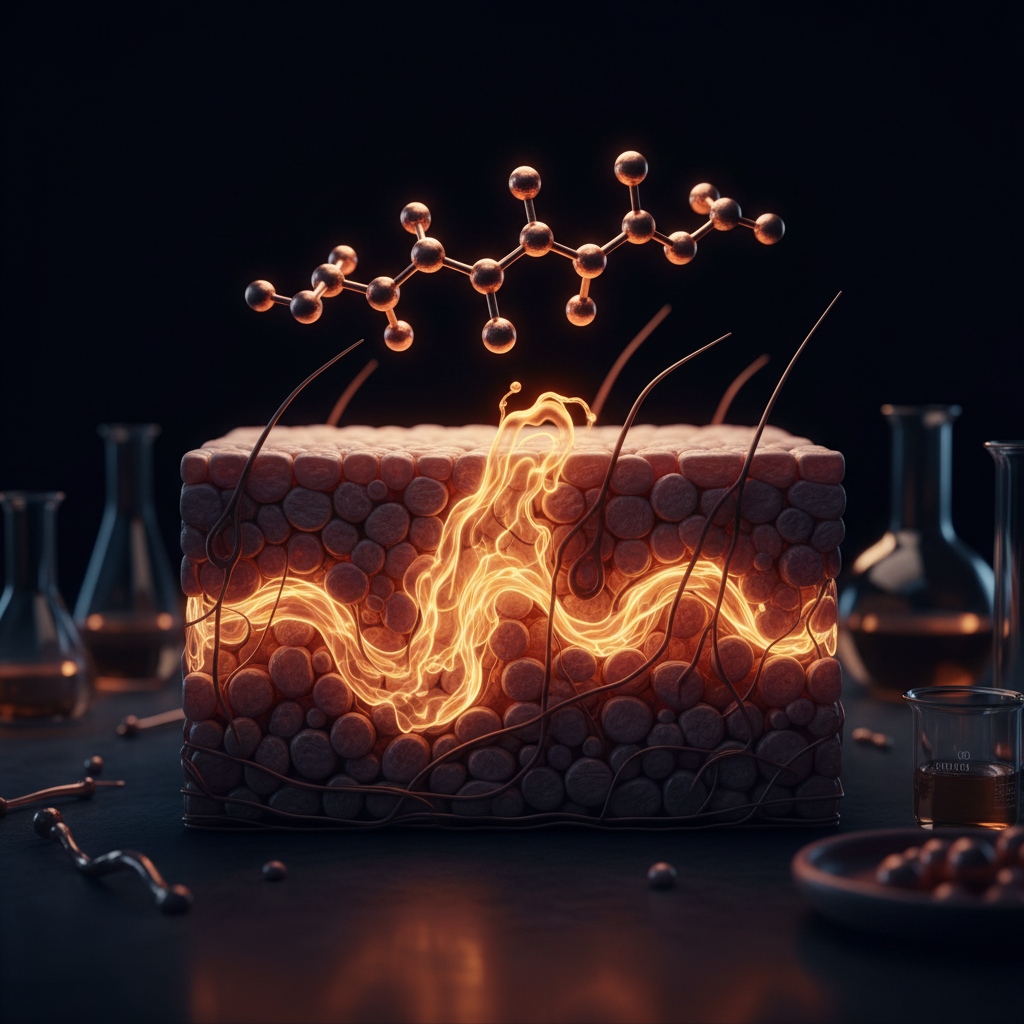
GHK-Cu simultaneously stimulates new collagen synthesis while removing old, damaged collagen via metalloproteinase upregulation.
GHK-Cu (Glycyl-L-Histidyl-L-Lysine Copper) is a naturally occurring plasma copper-binding peptide that was first isolated from human plasma in the early 1970s by Loren Pickart. Since its discovery, it has accumulated an impressive body of research supporting its role in wound healing, skin remodeling, and anti-aging.
The peptide naturally declines with age — levels drop from approximately 200 ng/mL at age 20 to 80 ng/mL at age 60. This age-related decline correlates with reduced skin regeneration capacity, decreased collagen production, and impaired wound healing — all hallmarks of skin aging.
In skin research, GHK-Cu has demonstrated multiple mechanisms of action. It stimulates the synthesis of collagen, elastin, and glycosaminoglycans — the fundamental structural proteins and molecules of the dermal matrix. It also promotes the production of metalloproteinases that remodel damaged collagen, removing the old and replacing it with new.
Wound healing research has shown GHK-Cu accelerates wound contraction, re-epithelialization, and increases the tensile strength of healed tissue. The peptide appears to attract immune cells to the wound site and stimulate blood vessel formation (angiogenesis), both critical for effective healing.
>99% Purity
HPLC verified every batch
Research Grade
Independent CoA included
Lyophilized
Maximum compound stability
⚠ All content is for informational and research purposes only. Products are NOT FOR HUMAN CONSUMPTION.