NAD+: The Cellular Currency of Youth and Energy
NAD+ levels decline with age. Here's what the research says about this critical coenzyme and its role in longevity, energy metabolism, and DNA repair.
NAD+ levels can drop by 50% between ages 20 and 50, directly impacting mitochondrial efficiency and DNA repair capacity.
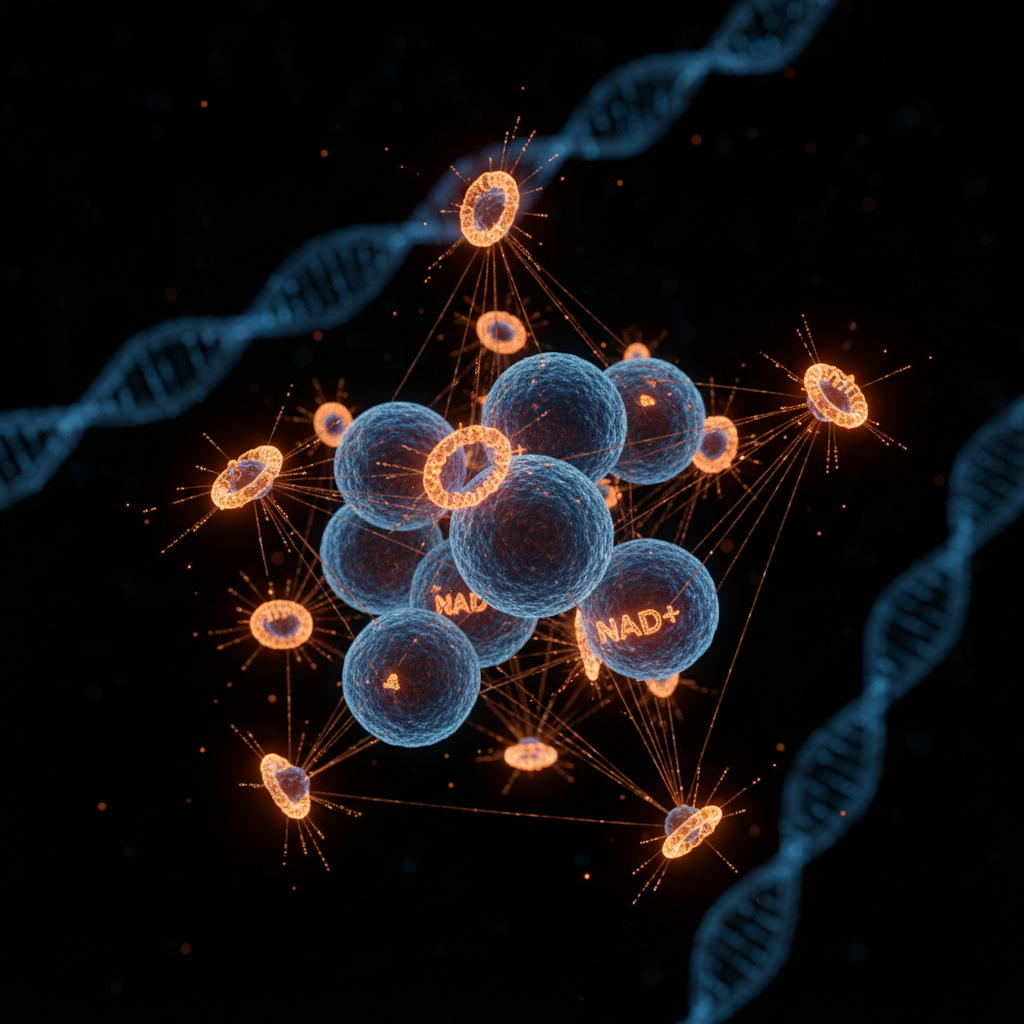
Nicotinamide Adenine Dinucleotide (NAD+) is perhaps the most important molecule you've never heard of. Found in every living cell, this coenzyme participates in over 500 enzymatic reactions and is absolutely essential for life.
As we age, NAD+ levels decline significantly — by middle age, levels can be half of what they were in youth. This decline is now recognised as a central driver of many age-related physiological changes. Research has linked declining NAD+ to reduced mitochondrial function, impaired DNA repair, and decreased sirtuin activity.
Sirtuins are a family of proteins often called "longevity genes." They require NAD+ as a co-substrate to function. When NAD+ levels are adequate, sirtuins actively regulate inflammation, stress responses, and cellular energy metabolism. Research in animal models has shown that boosting NAD+ can extend healthy lifespan and improve several markers of metabolic health.
The mitochondria connection is particularly important. These organelles — our cellular power plants — require NAD+ to produce ATP through oxidative phosphorylation. As NAD+ declines, mitochondrial function deteriorates, leading to decreased energy production and increased oxidative stress.
>99% Purity
HPLC verified every batch
Research Grade
Independent CoA included
Lyophilized
Maximum compound stability
⚠ All content is for informational and research purposes only. Products are NOT FOR HUMAN CONSUMPTION.