Research Peptide Stacks: Understanding Synergistic Mechanisms
Why do certain peptides work better together? An exploration of the science behind peptide stacking in research models.
TB-500 and BPC-157 target different cellular pathways — when combined, they create a comprehensive multi-pathway healing response.
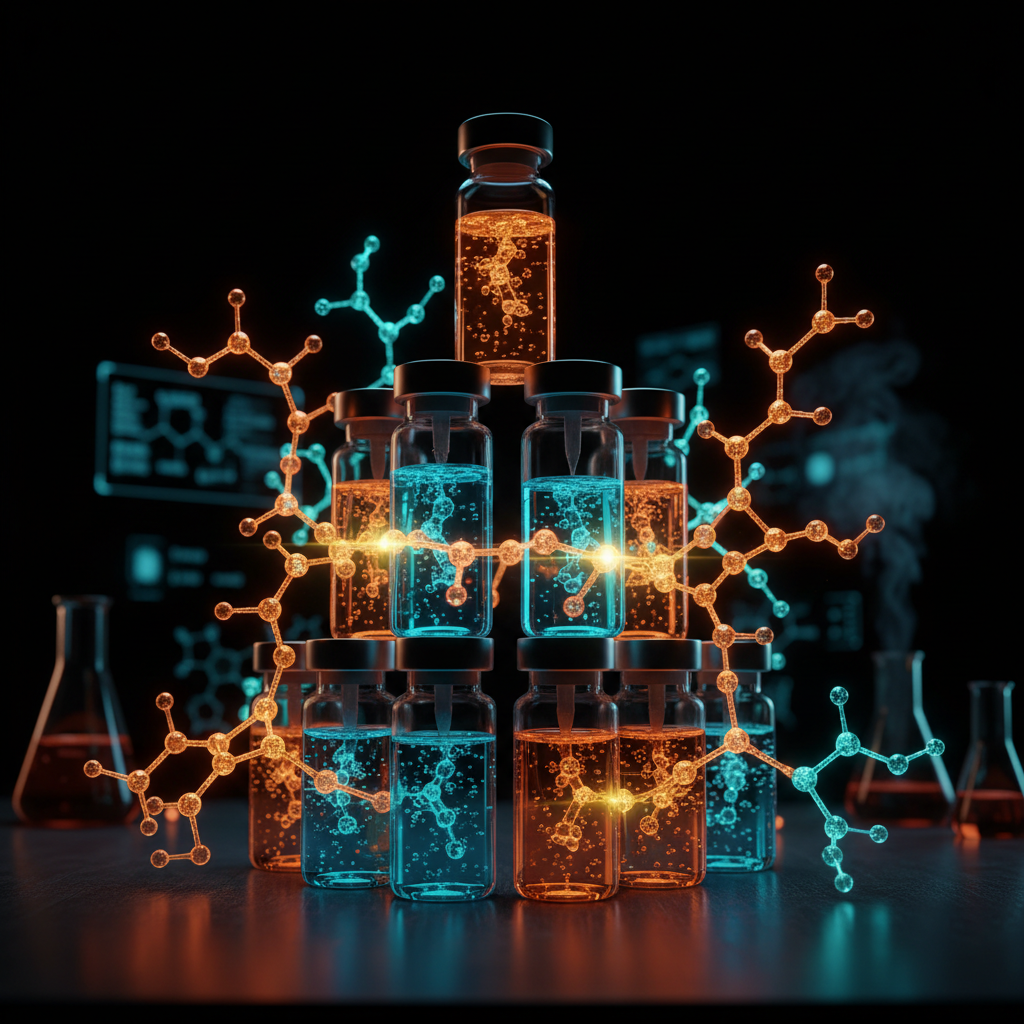
The concept of peptide stacking in research arises from the observation that certain peptides, when studied in combination, demonstrate additive or synergistic effects that exceed what either compound achieves individually.
The Wolverine Stack — combining BPC-157 and TB-500 — is perhaps the most researched combination. BPC-157 works primarily through the upregulation of growth hormone receptors and nitric oxide pathways, while TB-500 operates through different mechanisms involving actin polymerization and cell migration. Together, research suggests these complementary pathways result in more comprehensive healing responses.
The GLOW Stack adds GHK-Cu to the BPC-157 and TB-500 combination. GHK-Cu's primary research focus on collagen synthesis and metalloproteinase regulation complements BPC-157's angiogenic properties and TB-500's cell migration facilitation — creating a multi-pathway approach to tissue remodeling research.
Peptide synergy is an active area of research. Scientists are studying how different peptides that target different cellular receptors and pathways can be combined to create more comprehensive effects than any single compound. This reflects a growing understanding of biology as a complex system where multiple pathways interact.
>99% Purity
HPLC verified every batch
Research Grade
Independent CoA included
Lyophilized
Maximum compound stability
⚠ All content is for informational and research purposes only. Products are NOT FOR HUMAN CONSUMPTION.